
Besides the critical omissions in Unisa Professor Vuyisile Msila’s lengthy analysis on what ails Africa (The Mercury, May 25), it was disappointing to note that he remains committed to the discredited narrative that Kenneth Kaunda and Julius Nyerere were “visionary giants who cherished freedom and hoped for better communities.”
On the contrary, both Kaunda and Nyerere embraced socialism, which meant nationalizing banks and industries and discouraging foreign investment. In short order, they plunged Zambia and Tanzania into poverty and one-party state servitude, thereby initiating dependence on foreign aid. However, by his avoidance of reference to the tyrannies of Mugabe, Mengistu of Ethiopia, Machel of Mozambique and Nkrumah of Ghana, amongst others, Professor Msila would seem to indicate their exclusion from his list of “visionary giants.”
In noting that many African states are engaged in armed conflict (currently 18 of the 49), Msila laments the shackles of the past that remain embedded within African societies. One of the main reasons for that is the colonial legacy of arbitrarily erected state boundaries, bereft of territorial consideration for ethnic or cultural entities. Acceptance of that has been perhaps the biggest failing of the Organisation of African Unity to promote territorial stability.
Msila’s observation that African hopes for prosperity have been undermined by their own kith and kin is a polite way of noting that looting has been the main objective of those who achieved power, a reality synonymous with ANC rule of South Africa. Whereas the colonial powers scrambled to secure territorial gains for themselves in Africa, the post-colonial period has witnessed a scramble for power by elites for enrichment by squandering and looting resources. Robert Mugabe, who became a billionaire, exemplifies that trend.
But that avarice and corruption have necessitated hawking of the begging bowl to the former colonial powers, blaming their exploitation of Africa for post-colonial impoverishment. Thus, African independence has come to mean dependence on Western aid. It flows unremittingly because of the entrenched contrition in the West’s mindset that the legacy of colonialism justifies the provision of aid.
As has been exposed by Elon Musk in the US, very little if any of the billions in USAID funding actually benefited those for whom it was intended. Instead, the bulk of it funded nefarious causes and elitist groups.
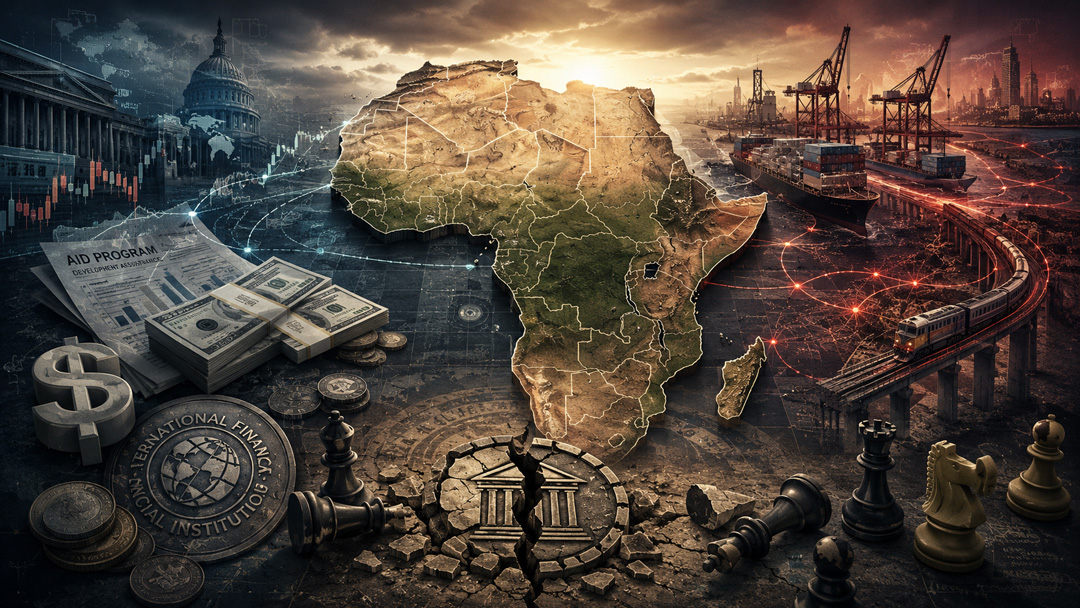
Where Professor Msila’s analysis is particularly disappointing is his lack of any reference to the role of China in Africa. As is evident by the ANC’s obeisance to China, African leaders seem oblivious to the fact that China is the new coloniser of Africa. Not only is China Africa’s biggest trading partner, but it is also Africa’s chief financier. Have African leaders wised up to where all this is headed? Moreover, what about the Islamisation of sub-Saharan Africa?
Besides facilitating the objectives of the Chinese Communist Party, African states are advancing China’s geopolitical ambition. That is why, inter alia, Africa’s plight is self-inflicted.


Add Comment